
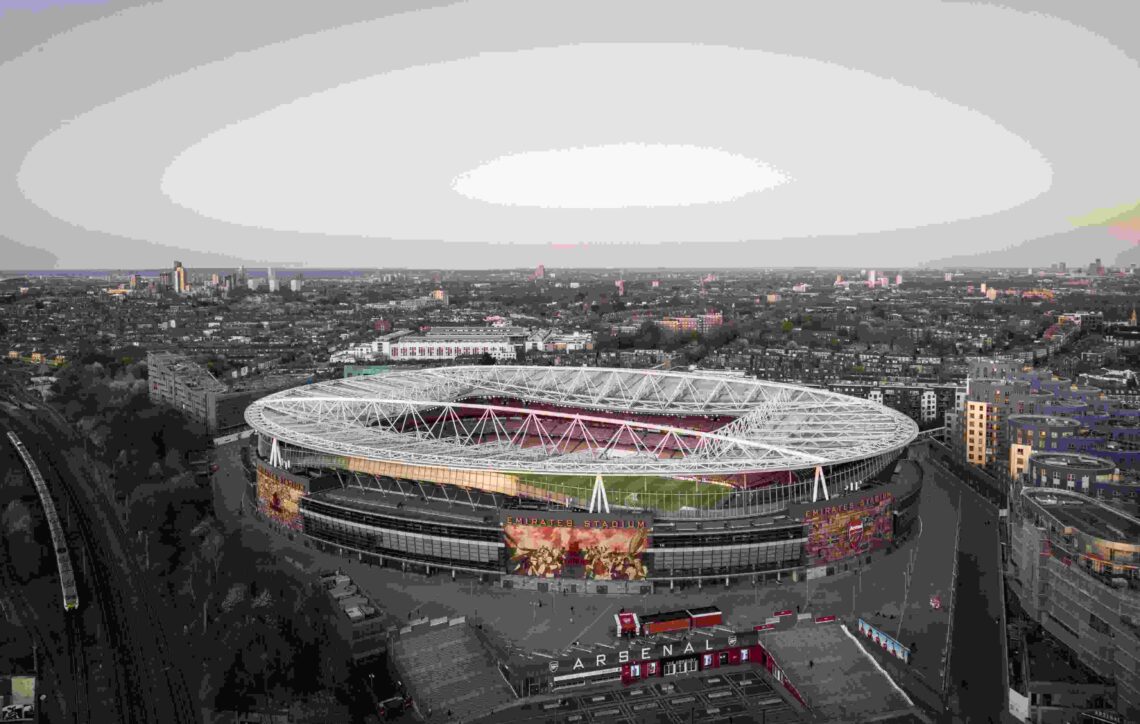

Newcastle United away on 21 November, Borussia Dortmund at the Emirates three days later, then Manchester City at home on the 29th. Arsenal have two important Premier League matches either side of a Champions League night, with little time to recover between them. The complication for Mikel Arteta is that the same starting eleven may not suit all three opponents.
There is still a home match against Hull City and an international break before this run, so selecting a Newcastle side now would be premature. The questions are already visible. Bukayo Saka is injured, William Saliba has only recently returned to contention, and Arsenal’s 2–1 win at Slavia Prague on Wednesday showed how quickly control can disappear after an excellent first half.
Newcastle: getting the first decisions right
The trip to St James’ Park brings an awkward choice in central defence. Saliba returned to the squad in Prague after a prolonged back-injury absence but remained an unused substitute. Ezri Konsa and Gabriel started, with Cristhian Mosquera replacing Konsa after 62 minutes. Availability for selection is different from being ready for successive demanding starts. A Saliba start at Newcastle would affect Arsenal’s partnership in front of David Raya and their build-up under pressure.
That pressure cannot simply be assumed. Newcastle manager Matthias Jaissle was critical after Monday’s defeat to Everton because his players had not carried out the high pressing he wanted. Arsenal need to be ready for both a forceful press and a more direct approach. Can the centre-backs and Martín Zubimendi provide a secure first pass without drawing the full-backs into positions that leave the flanks exposed?
On Arsenal’s right, Saka’s absence is more than a lost source of goals. An initial six-to-eight-week recovery estimate had been discussed, but that was not a confirmed return date.
Noni Madueke scored in Prague and offers a credible attacking outlet. The challenge is balancing his forward movement with the positioning of Ben White or Jurriën Timber behind him, particularly when possession turns over.
Dortmund require a different kind of control
Tuesday’s Champions League fixture changes the calculation. Newcastle will test Arsenal away from home. Against Dortmund, Arsenal may have longer periods on the ball but cannot afford a repeat of Prague’s second-half looseness. Arteta acknowledged his team had fallen short of their standards after the interval against Slavia. Rotating players makes sense only if replacements preserve the connections needed to keep possession and defend immediately after losing it.
Dortmund’s 2–1 win against Real Betis on 4 November supplied a specific warning. Julian Ryerson repeatedly advanced on their right and delivered crosses, while Serhou Guirassy went off injured before half-time. His availability against Arsenal is not yet established. Whoever starts up front for Dortmund, Arsenal’s left side must manage those deliveries without allowing a weak-side runner a free route into the box. The match will ask different questions of the back line than Newcastle’s potentially variable press.
Arteta’s midfield choices may carry more weight here than a wholesale change of forwards. Declan Rice, Zubimendi and Mikel Merino started in Prague, while Martin Ødegaard came off the bench. The problem is retaining a clear passing route into the attacking line while keeping enough players in position to stop Dortmund countering. Moving one midfielder changes the defensive work expected of the other two.
The City game makes each earlier choice matter
By Sunday 29 November, the cost of those decisions will be easier to measure. City arrive at the Emirates five days after Dortmund, but Arsenal’s options will be shaped by minutes played at Newcastle and on Tuesday. Resting a regular in Europe could improve his freshness for City, yet choosing a less familiar combination could weaken the performance that earns that rest. Arteta must weigh continuity against recovery rather than treating rotation as an end in itself.
The right-hand side is the clearest example. A comparison across the three games using Arsenal Live Scores, Fixtures, Results & Player Stats will show fixtures, results and individual numbers, while Arsenal’s bigger concern is whether the balance on that flank survives changes of personnel. Madueke may provide the width and threat Arsenal need without Saka, but the covering midfielder and full-back must prevent opponents exploiting the space behind him.
Against City, that balance matters even if Arsenal have enjoyed territorial control in the two previous matches. Possession does not remove the need for protection when an attack breaks down. Saliba’s possible reintegration also affects how high Arsenal can defend and how they build from deeper positions, but his readiness should be judged by what he has played, not by the temptation to save his first start for the biggest occasion.
Three matches will not deliver a definitive verdict on Arsenal’s squad. They will offer something more useful: evidence of whether Arteta can change personnel while preserving the habits that make the side difficult to play through. If Arsenal reach City with the right flank protected, their passing structure intact and Saliba managed sensibly, the work against Newcastle and Dortmund will have mattered beyond the points available in either game.