
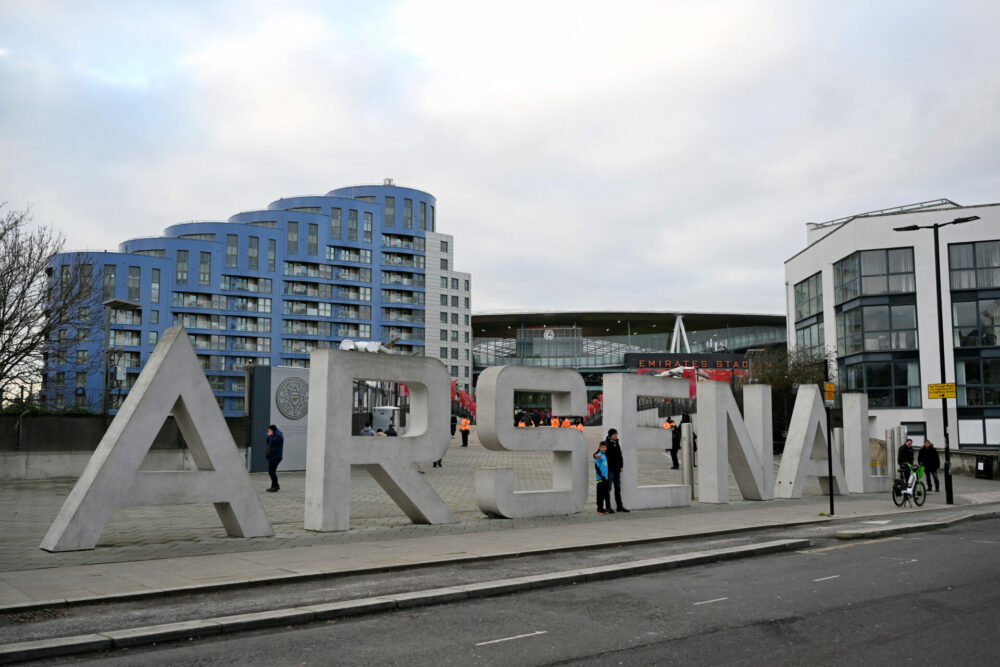

Arsenal’s on-pitch improvement has been matched by significant financial progress. While Mikel Arteta’s side has established itself among England’s leading clubs, its commercial operations have also expanded considerably.
Much of this increase reflects stronger sponsorship agreements, growing merchandise sales and the club’s improved international standing. However, understanding Arsenal’s progress also requires examining the wider Premier League market, where commercial opportunities continue to develop.
The Premier League as a Global Commercial Force
Arsenal operate within a competition that attracts substantial investment from international businesses. The Premier League’s global broadcasting reach, established clubs and large supporter bases make it particularly attractive to companies seeking international recognition.
According to data from Deloitte, in the 2024/25 season, Premier League clubs generated approximately £6.8 billion in combined revenue. Commercial income accounted for £2.4 billion, an increase of 13% compared with the previous campaign.
The six largest clubs contributed about 73% of that commercial total, showing how established international audiences drive sponsorship income.
Which industries invest in Premier League sponsorships?
Sportswear manufacturers remain among football’s most established commercial partners. Companies such as Adidas, Nike and Puma supply playing equipment while benefiting from merchandise sales and brand visibility.
However, the range of industries investing in English football is considerably broader:
- Airlines and tourism: International travel businesses use football partnerships to promote their services across different markets.
- Financial services: Banks, payment platforms and financial technology companies seek exposure to international audiences.
- Technology: Software providers and digital platforms establish partnerships involving advertising, content and business services.
- Automotive businesses: Vehicle manufacturers use clubs to strengthen consumer awareness.
- Food and drink: International brands invest in stadium advertising, promotional campaigns and supporter experiences.
- Gambling and iGaming: Betting operators and online gaming businesses use football sponsorships to develop brand recognition in a competitive market.
The iGaming sector is particularly interesting because several consumer-facing brands can operate under the same parent company or gaming licence. Understanding these relationships, including how casino sister sites UK are connected through shared ownership or operators, provides useful context for examining the businesses behind gambling brands. Although online casinos and sports betting platforms offer different types of gaming services, both operate within a broader industry where brand identity and commercial visibility matter.
Importantly, since the beginning of 2026/27, Premier League clubs have prohibited gambling sponsors from appearing on the front of matchday shirts. However, the agreement does not impose a complete advertising ban; other sponsorship positions and stadium advertising remain available, subject to applicable rules.
This wider commercial environment helps explain why Arsenal have been able to negotiate increasingly valuable agreements with businesses across several industries.
Improved Sponsorship Agreements Have Increased Arsenal’s Income
Arsenal’s relationship with Adidas has been particularly important. The renewal and extension of that agreement has been a leading contributor to commercial revenue growth.
The partnership combines kit manufacturing with substantial retail opportunities, allowing Arsenal to benefit from demand for official clothing and related products.
Emirates provides another example of the value of long-term commercial relationships. In August 2026, Arsenal confirmed an extension covering front-of-shirt sponsorship, training kit sponsorship and stadium naming rights until 2033.
Reported financial terms suggest higher annual payments under the renewed arrangement, although the club has not publicly disclosed the full contract details.
New partnerships provide additional opportunities
Arsenal have also expanded beyond their longest-standing sponsors.
Sobha Realty became the naming rights partner of the club’s London Colney training centre, now known as the Sobha Realty Training Centre.
Meanwhile, global payroll and HR company Deel replaced Visit Rwanda as Arsenal’s official shirt sleeve partner for 2026/27, after establishing a separate HR platform partnership in December 2025.
The club’s wider partner portfolio includes companies such as Airwallex, Google Pixel, Coca-Cola, Hotels.com and MG.
These arrangements allow Arsenal to develop relationships across different business sectors rather than depend entirely on a small number of major sponsors.
Merchandise Sales Have Become an Important Growth Factor
One notable development concerns Arsenal’s retail operations.
In 2024/25, retail sales rose by about 27% to around £130 million. That represents an increase of roughly £25 million compared with the previous year.
This matters because commercial revenue includes more than sponsorship payments.
Arsenal generate retail income through several channels:
- Official home, away and third kits.
- Training clothing and lifestyle collections.
- Club shops and online merchandise sales.
- Special product releases and branded collaborations.
Strong merchandise demand also supports the value of Arsenal’s agreement with Adidas.
However, an important financial distinction remains. Higher merchandise revenue does not translate directly into equivalent profit.
Manufacturing, distribution, staffing, and retail operations all involve costs. Changes in how merchandise transactions are recorded can also increase reported revenue without producing the same proportional improvement in earnings.
That distinction is essential when assessing the club’s financial performance.
Champions League Football Has Strengthened Arsenal’s Commercial Position
Arsenal’s continued participation in the Champions League, including reaching the semi-finals in 2024/25, increased the club’s exposure to international audiences.
For commercial partners, European fixtures provide additional opportunities to reach supporters across different countries.
Successful performances can also improve Arsenal’s negotiating position when existing agreements expire, or new partnership opportunities emerge.
However, the financial benefits must be separated correctly.
Arsenal records Champions League broadcasting distributions primarily as broadcasting revenue rather than commercial income.
Can Arsenal Maintain Their Commercial Growth?
The club’s progress has been substantial, but maintaining it will require continued investment.
Arsenal have expanded their commercial and administrative workforce to support partnerships, merchandise operations and other business activities. Such expansion brings additional operating costs.
There is also the broader issue of profitability. Higher income does not necessarily guarantee stronger profits, especially when investment in players and football operations continues to increase.
Further commercial growth could come from improved sponsorship valuations, international retail demand and new digital partnerships.
Arsenal’s position is considerably stronger than it was several seasons ago. The key question now is whether the club can turn its growing commercial income into lasting financial stability while continuing to compete for major trophies.