
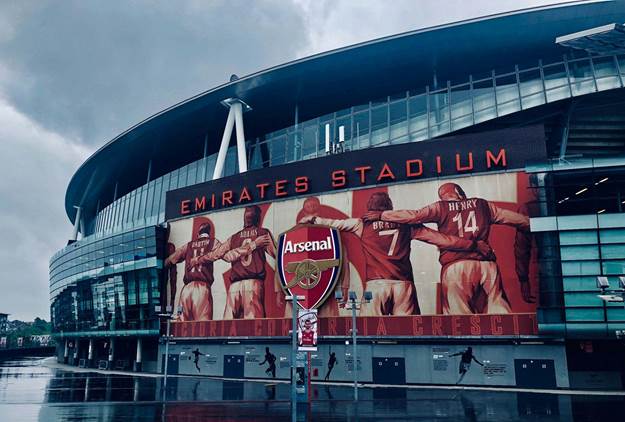

Every matchday, Arsenal’s betting odds tell a story that’s slightly different from the one dominating fan Twitter or the post-match phone-ins — and understanding the gap between the two is genuinely useful, whether you’re a fan trying to read the club’s underlying form or someone thinking about backing the Gunners on a given weekend. Odds compilers are, in effect, running a continuous statistical model on the squad that updates faster and more dispassionately than most matchday punditry.
What Actually Moves an Arsenal Betting Line
Public perception of Arsenal’s form tends to lag behind what the underlying data and, by extension, the betting market already reflects. A run of narrow 1-0 wins built on strong underlying expected-goals numbers will typically see Arsenal’s odds shorten across upcoming fixtures well before the “eye test” narrative catches up — because oddsmakers are pricing off shot quality, expected goals, and squad rotation patterns rather than just the scoreline.
Conversely, a string of good results built on unsustainable finishing — high goals scored relative to underlying chance quality — tends to see sharper markets hold their line or even lengthen slightly on Arsenal’s next few fixtures, anticipating regression that casual bettors, reading only the results column, often miss entirely.
Squad rotation and injury news move Arsenal’s lines faster than almost any other single factor, particularly around key positions where the drop-off to the next option is significant — a factor that’s been especially visible whenever key midfield or defensive options have been managed through a congested fixture list. The size of the line movement itself is informative here: a half-point shift suggests the market views the missing player as a rotation-level loss, while a more dramatic swing signals the market sees a genuine, hard-to-replace quality gap at that position.
Reading the European Competition Effect
Arsenal’s odds for domestic fixtures immediately following a midweek Champions League or Europa League match consistently reflect a fatigue-adjusted model that goes beyond simple squad rotation — travel distance for the European away leg, recovery time before the following weekend, and historical performance patterns in exactly this fixture-congestion scenario all factor into how sharp markets price the following domestic match.
This is a genuinely useful pattern for anyone following the club closely: Arsenal’s underlying performance in the match immediately after a taxing European away trip has historically diverged from what raw squad quality alone would suggest, and betting markets tend to price that divergence more accurately than general pre-match punditry does. Kickoff time matters here too — a Sunday afternoon fixture following a Tuesday night away trip in continental Europe carries meaningfully more recovery time than a Saturday lunchtime kickoff does, and sharp markets differentiate between the two even when the surface-level fixture congestion looks identical on a calendar.
Head-to-Head Patterns Worth Knowing
Certain fixture patterns repeat with enough consistency to matter for how markets price specific opponents. Arsenal’s historical record against sides that sit deep and defend in a low block has diverged meaningfully from their record against sides that press aggressively and look to play through midfield — a split that reflects the squad’s own tactical profile under Arteta more than any single opponent’s overall quality, and one that sharp markets account for well before a specific matchup narrative develops in the build-up.
This is worth tracking specifically for anyone following Arsenal’s odds across a full season rather than fixture by fixture — the pattern tends to hold up better than most single-match narratives. It also explains why Arsenal’s odds against a mid-table, low-block side can sometimes look less favorable than a surface-level table comparison would suggest — the market is pricing in a genuine stylistic difficulty, not underrating the opponent’s overall quality.
Set-piece efficiency is a related pattern worth watching. Arsenal’s set-piece output under Arteta has been strong enough across recent seasons that markets now factor it into both goalscorer props and total-goals lines specifically for matches expected to be tightly contested in open play — a detail that’s easy for a purely narrative-driven read of the fixture to miss entirely.
Where to Actually Find Value
Markets on major platforms — including operators like Faircrown, which offers dedicated Premier League and European competition markets alongside player-specific props like anytime goalscorer and clean sheet odds — increasingly price these patterns quite efficiently for headline markets like match result, but tend to leave more room for value in secondary markets: total cards, corner counts, and specific player performance props, where less betting volume means the line has had less opportunity to sharpen against informed money.
Anytime goalscorer markets in particular are worth watching closely relative to underlying expected-goals and expected-assists data for Arsenal’s front line — a player in strong underlying form but coming off a quiet scoring run on the scoreline alone will often carry better value in the goalscorer market than the raw market price initially suggests, before it eventually catches up to the underlying numbers.
Corner and card markets deserve a specific mention because they respond to genuinely different underlying drivers than the match result itself. A tactically cautious opponent sitting deep tends to produce fewer corners but potentially more cards as the match wears on and frustration builds; an aggressive, high-press opponent tends to produce the opposite pattern. Reading the tactical matchup for these secondary markets specifically, rather than assuming they simply scale with the match result, is where a meaningful share of the available value sits.
A Note on Discipline
None of this constitutes a guarantee, and Arsenal — like every club — is subject to the same genuine unpredictability that makes football worth watching in the first place. Reading the market intelligently improves the quality of your analysis; it doesn’t eliminate variance. Treat any wagering as a fixed, pre-decided entertainment budget rather than an expected source of income, and use platform tools like deposit limits and session reminders to keep that discipline in place across a full season rather than just a single matchday.
A full 38-match Premier League season offers plenty of opportunity to let a single result — good or bad — distort your read on the market going forward. The value of the analytical approach described here compounds over a season; it isn’t designed to call any individual match with certainty, and treating it that way undermines the entire point of a disciplined, process-driven approach.
The Bottom Line
Arsenal’s betting markets, read carefully, often reflect the club’s genuine underlying form more accurately and more quickly than matchday-to-matchday fan narrative does — which makes them a genuinely useful lens for understanding the season, independent of whether you’re placing a bet at all. For those who are, the value tends to sit less in the headline match-result market and more in the secondary markets that haven’t been priced as sharply by the wider betting public.
Frequently Asked Questions
What causes Arsenal’s betting odds to move?
Squad rotation, injury news, underlying expected-goals form, and fixture congestion around European away trips are the biggest drivers of line movement for Arsenal matches.
Do Arsenal perform differently after Champions League away trips?
Betting markets typically price in a fatigue adjustment for domestic matches immediately following a midweek European away leg, reflecting travel distance and recovery time.
Where is the best betting value on Arsenal matches?
Secondary markets — total cards, corners, and anytime goalscorer props — often carry more value than the headline match-result market, since they receive less betting volume and are priced less sharply.
Do Arsenal’s results always match their underlying performance?
Not always. Results built on finishing above underlying expected-goals form tend to see sharper markets anticipate regression, even while public perception still reads the run positively.
Is betting on football odds a reliable way to predict results?
No single method guarantees outcomes. Reading the market improves analysis quality but football, like all sport, retains genuine unpredictability.