
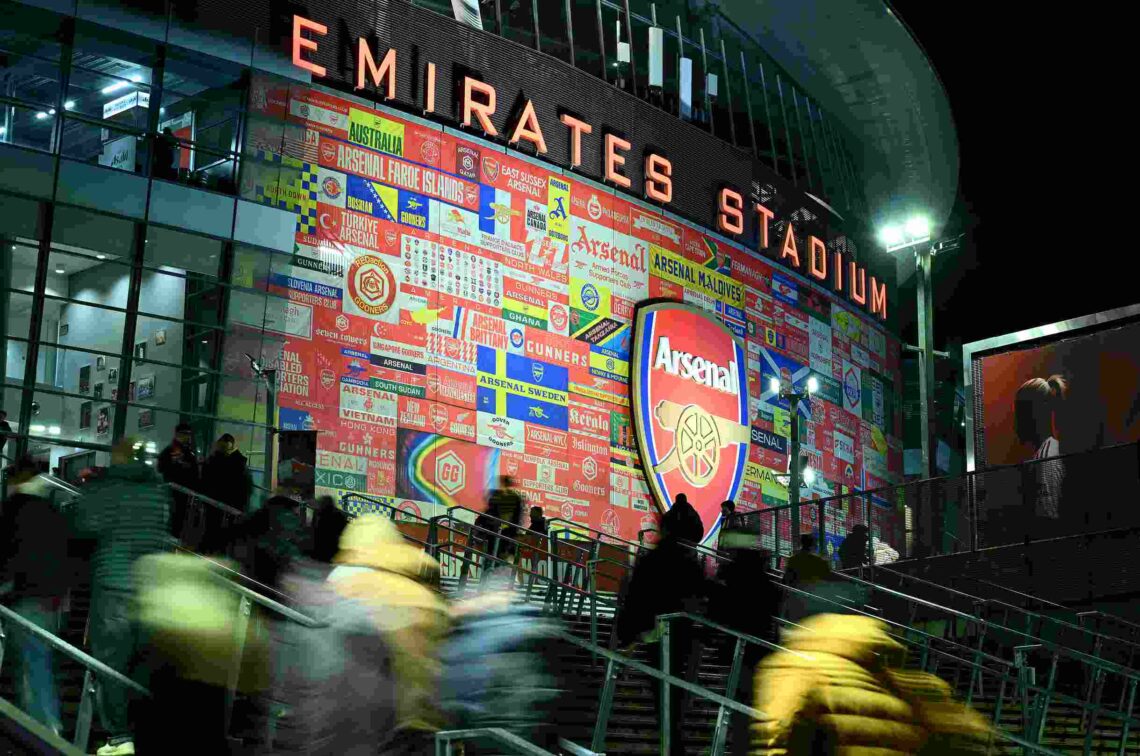

Arteta’s Arsenal won the league for the first time in 22 years and reached a Champions League final. The debate about where this squad ranks in club history is loud, getting louder, and will not be resolved at any point soon. Here is the one that actually keeps people up at night: which legends from the Wenger era would walk straight into this team, no adaptation period, no asterisk?
Thierry Henry
Start with the obvious one. Henry scored 228 goals in 377 Arsenal appearances, won four Premier League Golden Boots, and registered 20 assists in the Invincibles season alone, a single-season record he shares with Kevin De Bruyne. Those numbers are almost unfair to type out. The thing is, he fits Arteta’s system for reasons beyond the goals. Henry pressed from the front before anyone called it pressing, tracked back when strikers weren’t supposed to, and worked as part of a unit rather than a headlining act waiting for the ball to arrive. Arteta wants forwards who defend. Henry defended. Plenty of fans replay his goals over an online casino on a slow evening, which tells you something about the longevity of those highlights.
The five icons who belong in this conversation are not all strikers:
- Henry, for reasons already exhausted above
- Patrick Vieira, for reasons that take longer to explain properly
- Robert Pires, for reasons that tend to get underplayed
- Dennis Bergkamp, for reasons that require a separate paragraph
- Sol Campbell, for reasons that will make sense once you see who Arteta is missing
Patrick Vieira and Robert Pires
Vieira made over 400 appearances for Arsenal, won three Premier League titles, and captained the Invincibles. The stat that lands differently is this: Arsenal went 49 league games unbeaten across that era, and Vieira set the tone for most of them, combining power with a passing range that teammates still talk about. Arteta’s midfield relies on Rice and Zubimendi doing the disciplined work while others carry the ball forward. Vieira did all of that simultaneously. Whether you could still bet online on who would win a Vieira versus Rice midfield battle is a debate worth having at some point, though possibly not here.
Pires gets overlooked in these conversations, which is baffling. He scored 84 goals in 284 appearances and registered 10 assists during the Invincibles campaign alone. His best-ever goalscoring season came in 2003-04, with 19 in all competitions, and he finished it as a PFA Team of the Season pick for the third consecutive year. Arteta has used Martinelli and Saka wide, but the role Pires played, arriving late, reading space, scoring from angles that didn’t look like angles, is something the current squad would absorb without friction.
Here is what the left side of Arteta’s team would look like with Pires in it:
- A left winger capable of 15-plus league goals without being the first name on the teamsheet
- A creator who pressed when asked and drifted when not
- A player whose partnership with Henry produced 57 goals between them in one season
That last number deserves a pause. Fifty-seven goals from two players in one campaign.
Dennis Bergkamp and Sol Campbell
Bergkamp scored 120 goals from 423 appearances, a figure that undersells him because roughly half of what he did showed up as assists or press-breaking touches that set attacks in motion. His second-most famous Arsenal contribution, behind the Newcastle turn and finish in 2002, might be the number of times he found Henry in space with passes that no one else in the squad could execute. Arteta builds his attack around players who can receive under pressure and release quickly. Bergkamp was doing that in 1999.
Campbell is the one that often gets left out of these lists, which says more about selective memory than about his quality. He crossed North London from Spurs in 2001 and slotted into the Invincibles backline with Kolo Toure as his partner. The Invincibles conceded 26 goals across 38 league games. Twenty-six. Arsenal’s back line under Arteta has been excellent, but Campbell’s combination of aerial dominance and composure with the ball is exactly the profile Arteta has gone looking for in the transfer market repeatedly.
Five icons, five different positions, five different reasons they fit. The squad Arteta has built invites this kind of comparison because, for the first time in a long while, Arsenal are playing at a level that makes the question worth asking seriously.