
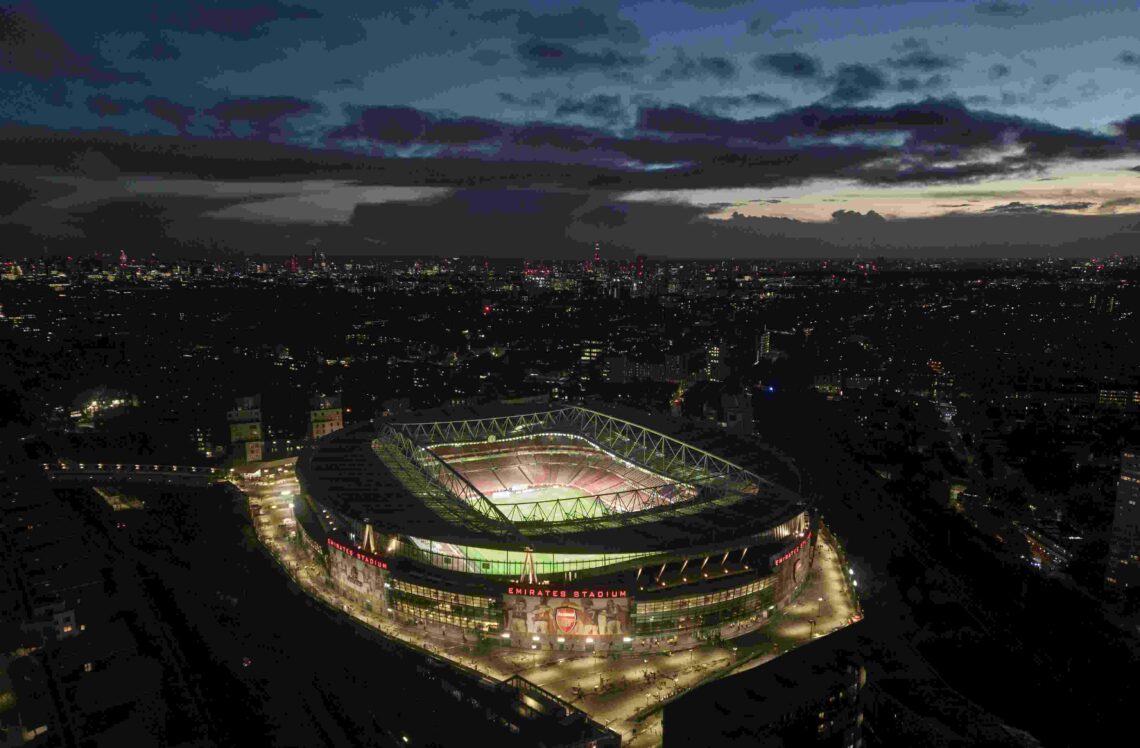

Arsenal’s proposed stadium expansion has been gestating ever since co-chair Josh Kroenke spoke about the possibility of a 75,000-seat venue in the summer of 2024. Since then, there have been various reports about exploratory plans, some involving adapting the elliptical roof, while the club has reportedly studied the redevelopment of Real Madrid’s stadium as a blueprint for navigating the logistical complexities of such a build.
Most recently, however, reports suggest the club’s hierarchy is looking at incorporating the innovative immersive environment developed by Cosm, a company Kroenke is involved with. Known as a “shared reality” space, Cosm’s current venues in Los Angeles and Dallas use huge 87-foot diameter LED domes, immersive sound, and 12K+ resolution images to give spectators a 360-degree viewing environment.
It would allow fans to see Arsenal matches in a new way, with sports finance veteran Kieran Maguire saying it would support the club’s efforts to create additional revenue streams. It would also help the Emirates Stadium meet its ambition of becoming an entertainment destination in and out of season. Given the hefty £500 million cost of the expansion, the club’s directors are keen to ensure long-term commercial value from the project.
A Modern Stadium to Match the Best in the World
Incredibly, it’s 20 years since Arsenal moved from Highbury to the Emirates Stadium. A watershed moment in sports stadia design, the club’s home in Holloway, London, influenced the approach to both the Wembley and Tottenham Hotspur’s new ground. Both incorporated the Emirates’ revenue-tiered seating approach and included a premium central ring to boost matchday income.
Similarly, the floating roof and elliptical aesthetic – designed to look lightweight despite its massive scale – has had an enduring impact on stadia redevelopments worldwide, including Lyon’s Groupama Stadium. Landmark stadiums like this have even influenced iGaming with online slots like Stadium Megaways featuring football ground design that takes its cues from the architectural approach used by the Gunners. Players of the 6×4 Megaways title will see the familiar perimeter trusses and curved, continuous bowl design present in the game.
Yet, despite enjoying one of the world’s best stadiums two decades after it first opened its doors, Arsenal’s push for expansion is driven by a necessity to remain competitive in an era where a club’s off-pitch infrastructure directly dictates its on-pitch spending power.
Under the Premier League’s evolving Profitability and Sustainability Rules (PSR), matchday income has become key to generating the organic revenue required to fund the sorts of big-money transfers the Gunners want to make. Spurs have already jumped ahead with their 62,850-seat venue.
Meanwhile, arch rivals Manchester United, a club that can already accommodate more fans than Arsenal, are preparing for a new, even larger stadium as part of its “Wembley of the North” project. By expanding the Emirates, Arsenal aims to ensure they are not left behind by their rivals’ ambitious developments, securing the financial muscle needed to sustain Mikel Arteta’s title-challenging squad for years to come.
Aiming to Set New Benchmarks
Arsenal’s bold plans for the Emirates aim to once again set new benchmarks in stadia design and function. By merging record-breaking capacity with the futuristic Cosm “shared reality” dome, its proposed investment is about more than just seats; it is a vital strategic move to navigate PSR constraints and secure the elite financial power necessary to maintain the Gunners’ dominance of the Premier League.