
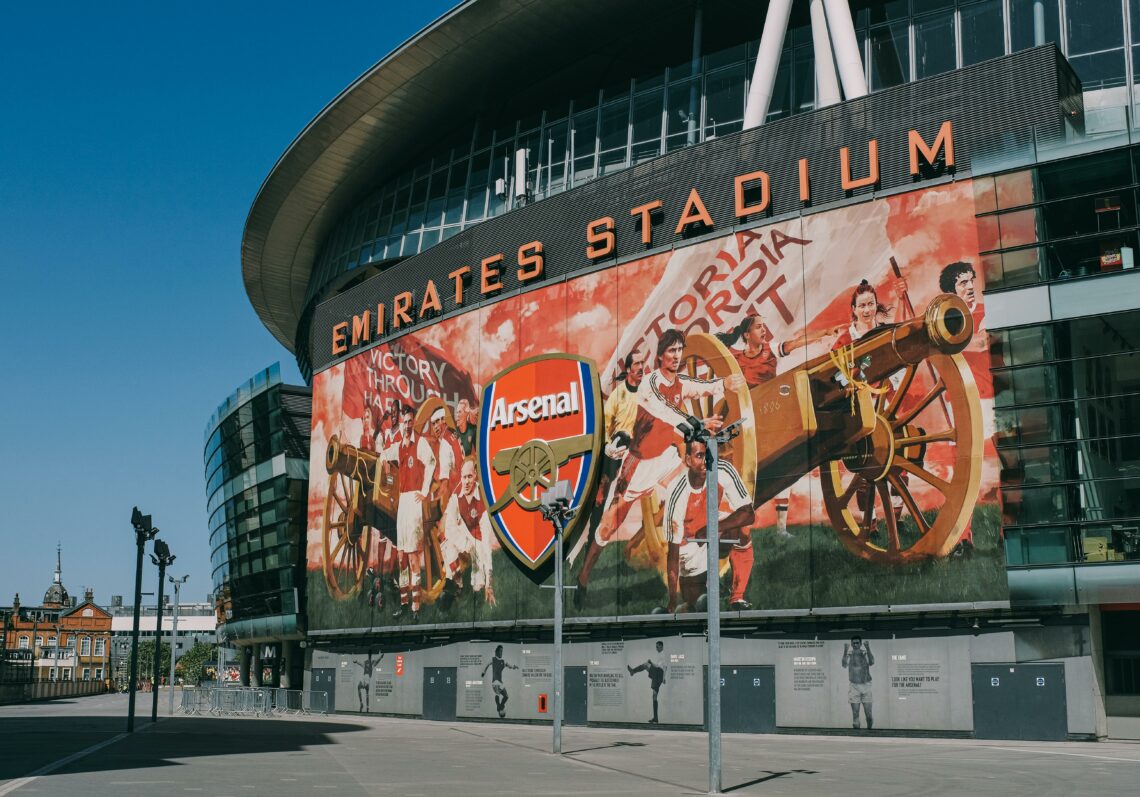

Arsenal head into the closing week of April 2026 tied with Manchester City at the top of the Premier League table on seventy points, with each side having played thirty-three of their thirty-eight league fixtures. Mikel Arteta’s side have delivered a campaign of twenty-one wins, seven draws, and five defeats across the league so far, with a goal difference of plus thirty-seven that sits among the best in the division. The season runs to its final matchday on twenty-fourth May 2026, which leaves five games between now and the end of the race for the first Arsenal league title in more than two decades.
The tightness of the race is the defining fact of the run-in. A single dropped point from either Arsenal or Manchester City across the next three weeks will have outsized consequences. The head-to-head picture between the two sides across the 2025-26 season has already played out, which means the fixture list now becomes the variable that matters most: who plays whom, away or at home, and how the international-break-heavy month of May manages the physical demands on both squads.
For Arsenal supporters watching the title charge from outside the United Kingdom, and for US-based Gooners in particular, the run-in has arrived inside one of the widest English-language Premier League media windows in years. NBC’s coverage, Peacock streaming rights, the club’s own Arsenal Media output, and an expanding ecosystem of match-day podcasts have given supporters more ways than ever to follow Arsenal’s form, and in discussions across North American Gunners communities adult fans sometimes reference operator pages such as the online casino promos for US players alongside their usual matchday reading. The substance of coverage continues to sit with the football itself, and the sections below look closely at the tactical identity, the transfer business, and the numbers that have brought Arsenal to this dead heat with City.
The Summer 2025 Transfer Window That Reshaped the Attack
Arsenal’s business in the summer of 2025 addressed the three positions that had defined previous title shortfalls. The arrival of Viktor Gyokeres from Sporting Lisbon gave Arteta the elite number nine the club had been searching for since Pierre-Emerick Aubameyang’s departure, and he has delivered on the expectation with a league-leading twelve Arsenal goals by late April. The signing of Martin Zubimendi from Real Sociedad has provided the deep-lying midfield control the side lacked in previous campaigns, and the addition of Eberechi Eze has given Arteta a genuine creative option on the left who has contributed six league goals across twenty-six appearances.
The scale of the investment was significant, and it has delivered measurable returns. Gyokeres has been the clearest single influence on Arsenal’s attacking output, with his combination of hold-up play, pressing intensity, and box-arriving runs giving the side a vertical presence that earlier Arteta seasons did not have. Zubimendi’s five goals from midfield are a bonus on top of his primary defensive and distribution responsibilities, and the overall effect of the three signings has been to give the squad depth that survived the long European and international windows without meaningful drop-off in performance.
The Defensive Record That Underwrites the Title Bid
The defensive numbers tell the other half of the story. Arsenal’s goal difference of plus thirty-seven across thirty-three matches is a product of goals scored paired with goals prevented, and the partnership between William Saliba and Gabriel Magalhaes at centre-back has continued to be one of the most effective in Europe. Gabriel’s aerial dominance, Saliba’s composure on the ball, and the collective cover from Jurrien Timber and Riccardo Calafiori at full-back have produced a defensive unit that has conceded at one of the lowest rates in the division.
David Raya has built on his 2024-25 form behind the back four, and the Spanish goalkeeper’s distribution has added a first-phase passing line that lets the side build possession without forcing the midfield into compressed spaces. The Declan Rice-and-Zubimendi pairing ahead of the defence has given Arsenal the double-pivot protection that has been a recurring feature of Arteta’s best match-ups, and the side’s composure under pressure in the final minutes of tight fixtures has produced the narrow wins that separate title-winners from runners-up across a thirty-eight-match season.
Odegaard, Rice, and the Midfield Triangle
The triangle of Martin Odegaard, Declan Rice, and Zubimendi continues to dictate how Arsenal control fixtures. Odegaard’s captaincy has been one of the defining leadership stories of the season, and his ability to find half-spaces between the opposition lines has produced the creative output that connects midfield to attack. Rice’s box-to-box distance covered remains at the top of the Premier League charts, and his goal-scoring runs late into the box have added a further attacking dimension that complements Gyokeres’s movement at the front.
The rotation options behind the first-choice three have held up through the demanding autumn and winter schedule. Kai Havertz, when available, has continued to offer a second attacking-midfield profile that Arteta can deploy when a fixture demands extra presence in the final third. The depth has allowed the coaching staff to manage Odegaard’s minutes during the compressed Champions League midweeks without dropping the overall standard of central-midfield play.
Bukayo Saka, Eze, and the Wide-Attack Rotation
Bukayo Saka remains the first-choice right-sided attacker and the player most likely to produce a decisive individual moment in a tight fixture. His dribble-carry-to-cross numbers remain among the highest in the league, and his combination play with Rice and Gyokeres on Arsenal’s right has produced a meaningful share of the team’s expected-goals output through the season. The arrival of Eze alongside Gabriel Martinelli on the left has given Arteta a rotation option that previous seasons lacked, and the flexibility to choose between a direct-runner profile or a creative-playmaker profile on the left wing has helped through matchups against deep defensive blocks.
The attacking shape in possession continues to vary between a 4-3-3 and a 4-2-3-1 depending on opposition, and Arteta’s willingness to let the front three rotate through the width of the pitch has been one of the clearest tactical signatures of the 2025-26 campaign. The quick vertical transitions into Gyokeres’s channel runs have been particularly effective against mid-block defensive structures, which have historically frustrated Arsenal’s patient build-up play in previous seasons.
The Derby Record and the Head-to-Head Ledger
Arsenal’s 2025-26 North London Derby record against Tottenham produced the kind of dominant results that settle the mood around the Emirates ahead of title run-ins, and the Manchester head-to-head with City across the season has so far split across two fixtures. The calibration of Arsenal’s performance against direct rivals has been one of the consistent strengths of the campaign, and it is part of why the club has remained level with City on points rather than being forced to chase on goal difference or head-to-head tiebreakers.
Arsenal’s long trophy history across the last twenty years reminds supporters that title charges can be settled in unexpected fixtures rather than in marquee matchups, and Arteta’s side have repeatedly delivered the kind of results against mid-table and lower-table opposition that translate into points rather than highlights. The focus across the final five matches remains on maintaining that consistency against sides with nothing material left to play for in the table.
The Champions League Run Alongside the Title Race
The 2025-26 Champions League has run in parallel with the Premier League campaign, and Arsenal’s performance across the European midweeks has been a consistent presence in the broader season story. The Gunners have managed the dual-competition schedule carefully, with Arteta’s squad depth allowing him to rotate for group stage and knockout fixtures without meaningfully reducing Premier League selection options. The competition for places has intensified as a result, and the depth of the current squad relative to the squads of the 2022-23 and 2023-24 seasons is one of the clearest structural differences.
The effect on the domestic race has been mixed. Positive European results have added to the momentum around the club through the second half of the season, and the physical and mental load of extended European football will test the squad across the final five Premier League fixtures. The Premier League vote on gambling shirt sponsors, which set up the 2026-27 front-of-shirt gambling wind-down, remains the wider commercial backdrop to Arsenal’s continued Emirates partnership, and the stability of the shirt deal continues to underwrite the long-horizon commercial context around the title run.
The Fixture Calendar for the Final Five Matches
The final five Premier League fixtures of the 2025-26 season will determine the title. Arsenal enter the closing stretch with three matches scheduled at the Emirates and two on the road, and the specific order of those fixtures combined with Manchester City’s own remaining list is the variable that sets the psychological backdrop to each matchday. The season’s final matchday falls on twenty-fourth May 2026, which gives the title race just over four weeks to resolve itself.
The risk variables are familiar to Arsenal supporters who remember the 2022-23 title run-in. Injury management, international-window distraction, and the tendency for mid-table sides to raise their level against a title-chasing opponent are all factors that can derail a late-season run. Arteta’s insistence on rotation through autumn and winter has been calibrated precisely for the physical demands of this final stretch, and the depth of the current squad should give Arsenal more capacity to absorb a single setback than the 2022-23 side had.
Dated 2025-26 Arsenal Shifts Worth Remembering
Several specific moments across the 2025-26 campaign have already shaped the shape of the title race and are worth tracking alongside the final-five fixtures. Viktor Gyokeres’s arrival from Sporting Lisbon was announced in the summer 2025 window and finalised ahead of the season’s opening fixture. Martin Zubimendi’s move from Real Sociedad closed in the same window. Eberechi Eze’s arrival gave Arteta the additional creative option on the left flank. The Emirates Airlines shirt partnership, contracted through 2028, continued into its twentieth consecutive season on the Arsenal front-of-shirt. And the Premier League’s 2026-27 front-of-shirt gambling wind-down, approved unanimously in April 2023, remains the wider commercial backdrop to the season.
What the Next Four Weeks Will Decide
Three variables will shape how Arsenal supporters remember the 2025-26 campaign. The first is whether Arteta’s side can convert their points-level position with Manchester City into the first league title in twenty-two years, which would cement a multi-season rebuild that has already delivered two runner-up finishes. The second is how the Champions League knockout path unfolds in parallel with the domestic run-in, and whether Arsenal can carry a competitive European schedule into the closing Premier League fixtures without physical cost. The third is whether Gyokeres can sustain his scoring rate into the final five matches and finish as the league’s top scorer, which would complete the best possible first-season argument for the summer 2025 signing.
The substance of the answer will be written across the next four weeks. Whatever the outcome, the 2025-26 campaign has already re-established Arsenal at the very top of the English game after a decade of near-misses and rebuilds, and the identity Arteta has built at the Emirates is the identity most likely to carry the club through the next cycle of Premier League and European seasons.