
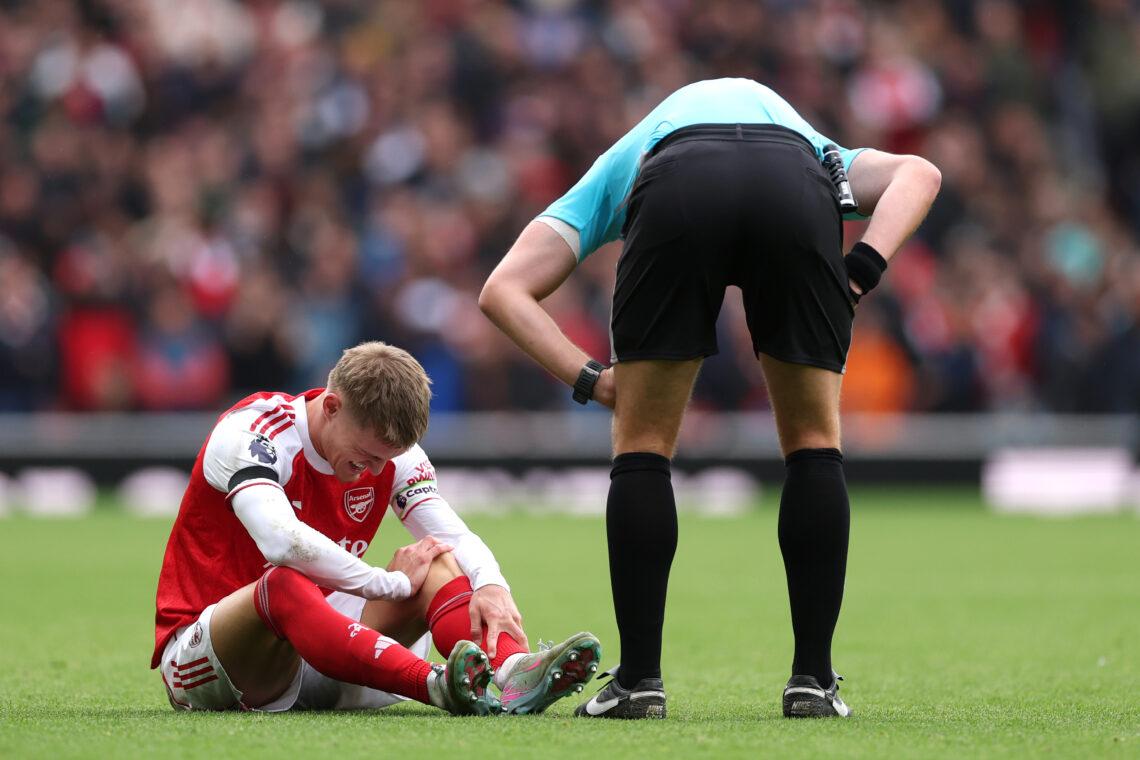

Arsenal’s injury crisis is turning what should be a commanding title charge into a delicate balancing act, with Mikel Arteta forced to juggle an over‑worked core, a patched‑up defence and an attack that has rarely been at full strength. Arsenal are still top or very close to the top of the Premier League table heading into the new year, but the extent and profile of their absentees means the margin for error in this season’s title race is shrinking fast.
How bad is Arsenal’s injury situation?
Arsenal have been hit across the pitch rather than in one position, which is what makes this injury crisis so damaging. Only a handful of first‑team players have avoided any injury or illness this season, underlining how widespread the problem is rather than being limited to one unlucky individual.
Key points:
- Long‑term issues for players such as Gabriel Jesus and others have carried over from previous campaigns, with some still managing minutes carefully after serious knee or ligament problems.
- Shorter‑term knocks, hamstring strains and muscular injuries have repeatedly sidelined Bukayo Saka, Gabriel Martinelli, Leandro Trossard and Viktor Gyökeres, regularly denying Arteta his preferred front line.
- In defence, recurring issues for William Saliba, Jurrien Timber, Riccardo Calafiori and others have left the back line looking thin; in some games, late warm‑up injuries have forced changes minutes before kick‑off.
Causes: schedule, workload and risk management
Arteta has publicly linked Arsenal’s problems to an overloaded calendar, arguing that the sheer volume of fixtures across the Premier League, Champions League and domestic cups leaves players with too little recovery time. When the same core of 14–15 players is asked to go again every three days, small physical issues quickly snowball into significant absences.
Several structural factors are at play:
- Fixture congestion over the autumn and festive period has meant repeated high‑intensity matches with minimal rest, especially for starters like Declan Rice and Martin Ødegaard.
- Clusters of injuries in single positions (for example, at centre‑back) create a vicious cycle: remaining players are over‑played to cover gaps and then become more likely to get injured themselves.
- Arsenal’s aggressive, pressing style demands huge physical output from wide players and midfielders, which is harder to sustain when the squad is not rotated as deeply as rivals like Manchester City.
In some ways, managing this risk resembles the discipline required in real money online casinos: the temptation is always to double down with the same “lucky” options, but long‑term success depends on knowing when to walk away, spread risk and protect your bankroll – or, in Arsenal’s case, their core players.
Immediate impact on performances
The injury list has not derailed Arsenal’s season, but it has changed the way they win games and reduced the margin for error. Arsenal are still posting one of the best defensive records in the division, yet the constant reshuffling at the back makes it harder to maintain rhythm in build‑up play and to defend the penalty area with the same authority as last year.
In attack, Arsenal are “surviving, not thriving”:
- The frontline has rarely been fully fit at the same time, which has limited Arteta’s ability to use rotations, pairings and in‑game changes to unpick deep blocks.
- A stale attacking feel has crept in at times, with fewer runs in behind and more reliance on individual moments from Saka, Ødegaard or new signings to win tight games.
- Late saves and narrow scorelines have become common; recent matches have been decided by fine margins, with Arsenal needing big interventions from David Raya and others to protect slender leads.
What it means for the title race
Despite everything, Arsenal sit in the heart of the title race, trading blows with Manchester City and a resurgent Aston Villa near the top of the table. The gap between the top three remains small enough that a two‑week spell of good or bad form could completely reshape the standings, especially around the festive and early‑spring blocks.
In title‑race terms, the injury crisis has several clear consequences:
- Arsenal’s points ceiling is likely lower than it would be with a fully fit squad, because Arteta has fewer options to change matches from the bench or to rest key players in “winnable” fixtures.
- Manchester City’s deeper squad means they can absorb injuries more easily; over a 38‑game season, that depth tends to tell, particularly between December and March.
- The top of the table is already defined by “fine margins” – recent wins for Arsenal and City have come by a single goal – so any additional drop‑off in intensity from a tired Arsenal core could quickly translate into draws or defeats that swing the race.
Can Arsenal overcome the crisis?
Arsenal have shown resilience before; last season’s experience of losing William Saliba at a crucial moment is a fresh reminder within the club of how a single key injury can tilt a title race. This time, the problem is less about one player and more about accumulated strain across the squad, so the solution has to be broader than simply waiting for one star to return.
For Arsenal to stay in the fight into April and May, several things need to happen:
- The medical and performance staff must stabilise the situation so that new muscle injuries slow down and returning players are not rushed back only to break down again.
- Arteta has to trust his wider squad more, especially in lower‑stakes games, to protect the fitness of core starters for decisive Premier League and Champions League nights.
- The January window may need to be used opportunistically, adding at least one versatile defender or forward who can play 1,000–1,500 minutes and ease the load on over‑worked regulars.
If those steps work and enough key players stay on the pitch, Arsenal’s current position in the table proves that the title is still within reach. If the injury crisis continues at the same pace, though, the most likely impact will be subtle but decisive: a few extra dropped points in spring, just enough to let a better‑rested rival edge clear in one of the tightest Premier League title races in recent years.